Your digging level
Description
Samba gospel is a Brazilian Christian style that fuses the rhythmic language of samba and pagode with evangelical praise-and-worship lyrics.
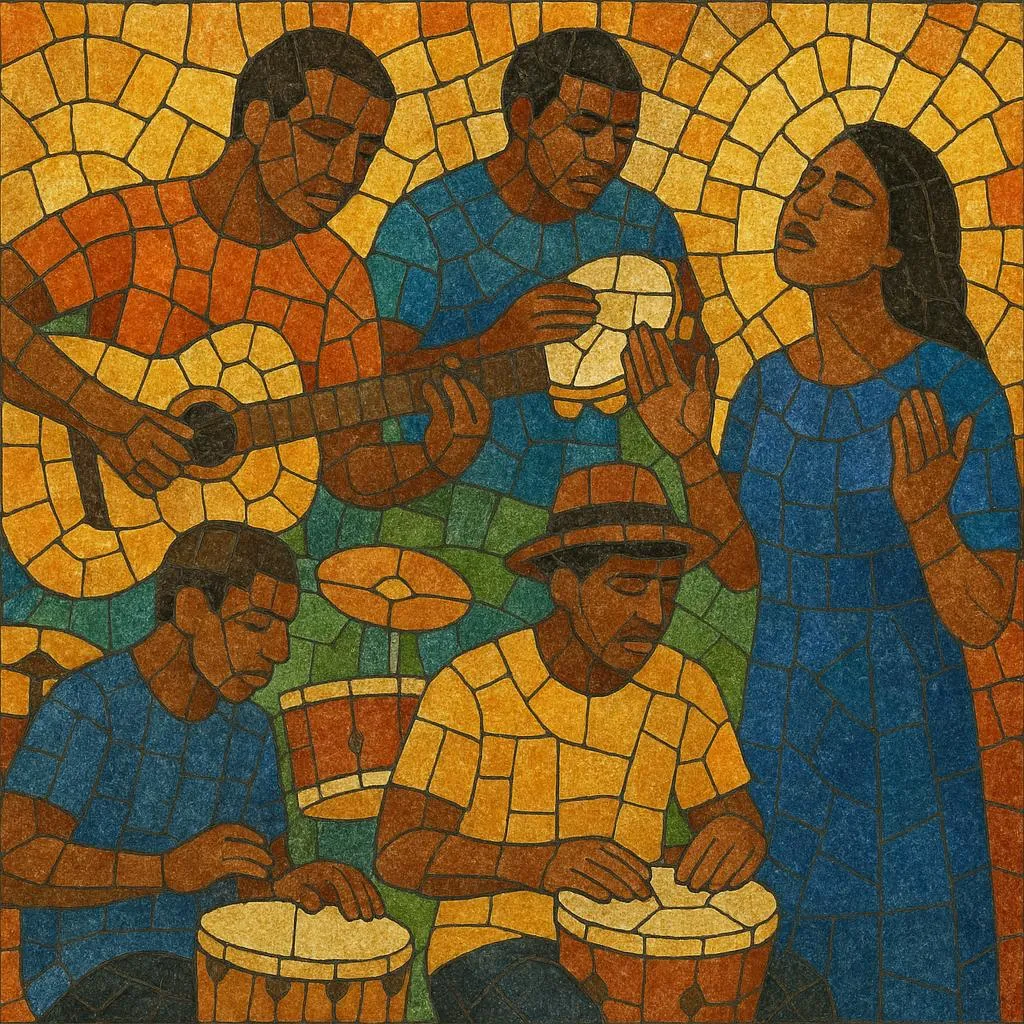
It keeps the unmistakable swing of samba—syncopated grooves in 2/4, call-and-response refrains, and hand-percussion drive—while shifting the thematic focus to testimony, prayer, and Biblical messages in Portuguese. Typical ensembles use cavaquinho, acoustic guitar, surdo, pandeiro, tantan, repique de mão, and light drum kit, often supported by congregational choirs.
Musically, it ranges from relaxed pagode worship suitable for small church gatherings to more celebratory, carnival-inflected arrangements for festivals and open-air services. The result is an accessible, danceable form of gospel that sounds organically Brazilian.
History
Samba gospel grew out of two parallel currents in Brazil: the long-standing centrality of samba/pagode in urban popular culture and the rapid expansion of evangelical Protestantism with its modern “gospel” repertoire. As pagode exploded in popularity in the 1990s, church musicians began to adapt its grooves, instrumentation, and roda-style call-and-response to worship settings, reframing secular performance practices with Christian lyrics.
By the 2000s, dedicated church groups and converted pagodeiros were issuing recordings and leading services that intentionally sounded like a roda de samba—just with praise themes. Small labels, church media ministries, and community radio helped spread the sound beyond Rio de Janeiro and São Paulo. Live worship DVDs and social networks in the 2010s further normalized the style, and samba gospel became a familiar option alongside pop-rock and sertanejo worship inside many Brazilian churches.
Samba gospel served as a bridge between neighborhood musical life and congregational worship. It softened older church reservations about samba’s nightlife associations by demonstrating how the groove’s conviviality, communal singing, and rhythmic uplift could serve praise, testimony, and mission.
Today the style appears in church services, outreach concerts, and Christian festivals. Arrangements span intimate pagode trios to fuller sections with brass, choir, and percussion batteries, but the core remains: a Brazilian swing carrying evangelical devotion.