Your digging level
Description
Ranchera (canción ranchera) is a traditional Mexican song genre characterized by passionate, emotive vocals; memorable, singable melodies; and direct, heartfelt lyrics about love, heartbreak, drinking, patriotism, rural life, and personal honor.
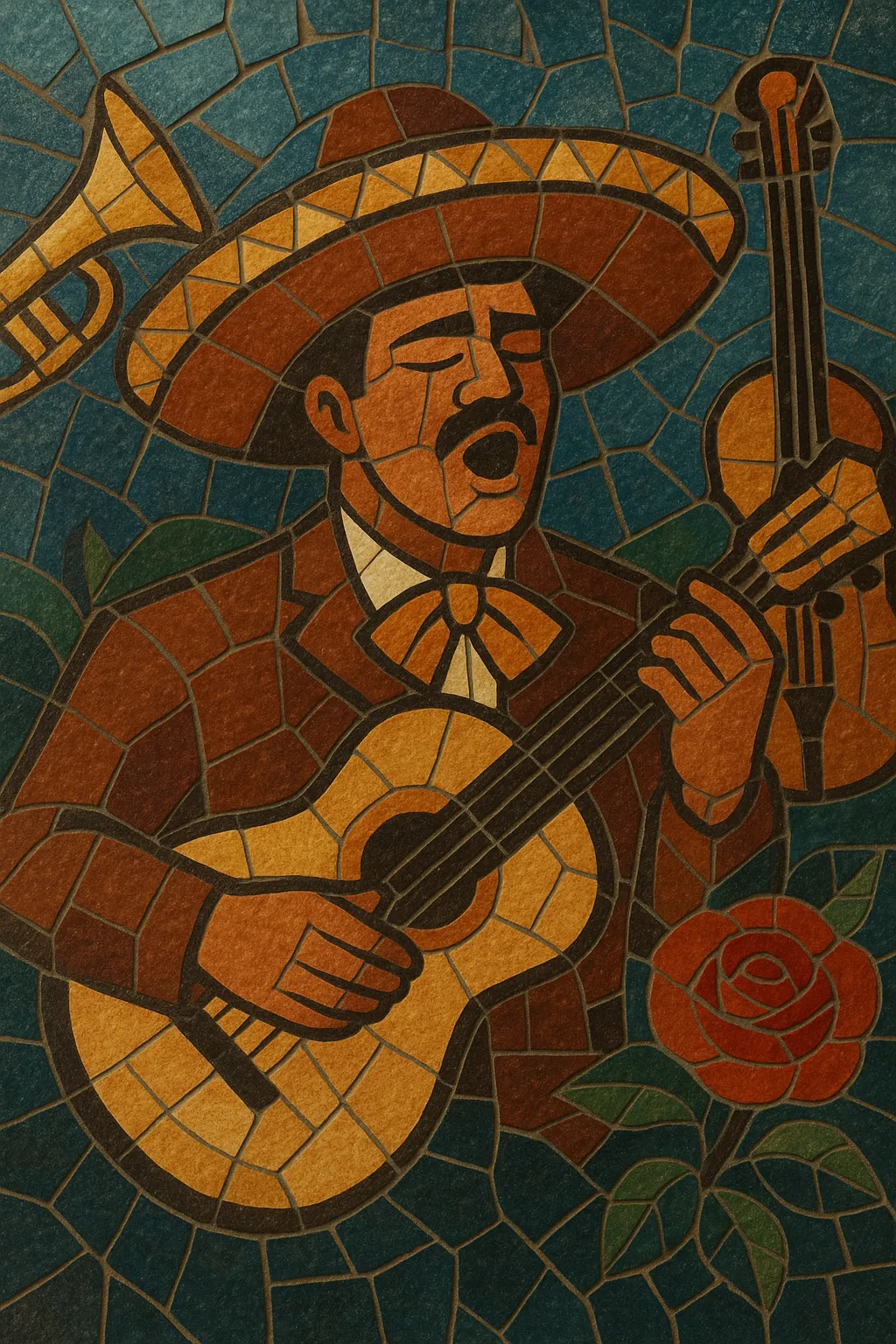
Although its roots reach back to rural song traditions of the late 18th and early 19th centuries, ranchera consolidated as a national popular style before the Mexican Revolution and was later projected across Latin America through the Golden Age of Mexican cinema. The genre is commonly performed with mariachi (violins, trumpets, vihuela, guitarra, guitarrón), but it can also appear with norteño, banda, or solo voice-and-guitar arrangements.
Musically, rancheras often use simple strophic or verse–chorus forms, tonal harmonies (I–IV–V with occasional secondary dominants or modulations), and meters in 3/4 (vals ranchero) or 2/4 and 4/4 (ranchera alegre or ranchera lenta). Vocal delivery features expressive rubato, dramatic dynamic arcs, and the iconic grito (a shouted cry) between phrases.
History
Ranchera crystallized in rural Mexico during the 1800s, drawing on a broad weave of local folk song types and dance rhythms. Influences included Spanish romance traditions, waltz and polka brought by European immigrants, and regional sones (especially son jalisciense and huapango). Before the Mexican Revolution (1910), these songs articulated everyday life on the ranch and the countryside, favoring plain-spoken, emotionally direct texts.
In the years around the Revolution, the ranchera became a symbol of popular identity that contrasted with the aristocratic salon tastes of the Porfiriato. Its themes—love won and lost, drinking bravado, loyalty to land and nation—matched a new, post-revolutionary national consciousness. The repertoire spread from cantinas and plazas to theaters and radio, solidifying its poetic and musical conventions.
The 1930s–1950s were pivotal: Mexican film popularized ranchera throughout the Spanish-speaking world. Figures like Jorge Negrete, Pedro Infante, and Lola Beltrán personified the charro image and projected the genre’s dramatic vocal style. Orchestrated mariachi arrangements standardized the instrumentation (violins, trumpets, vihuela, guitarra, guitarrón), while composers such as José Alfredo Jiménez expanded the canon with enduring songs.
From the 1960s onward, ranchera intertwined with other regional Mexican currents—banda (including Sinaloan brass styles), norteño, and grupera—yielding variants like bolero ranchero (with slower, romantic phrasing) and vals ranchero. Vicente Fernández’s towering presence kept the traditional mariachi-backed ranchera at the center of mainstream appeal.
Today, rancheras remain core repertoire across regional Mexican formats and international stages. Classic standards coexist with new compositions, and the style appears in crossover productions (from pop to symphonic settings). Its emotive singing, lyrical directness, and communal sing-along quality continue to define the genre’s enduring impact.


![Guadalupe Trigo [Mi Ciudad]](https://e.snmc.io/i/300/w/91f6fd75c37e5850011a27a1ffb3a89c/12572312/Guadalupe%20Trigo%20-%20Guadalupe%20Trigo%20%5BMi%20Ciudad%5D%2C%20Cover%20art.webp)